20-minute lesson
Kindergarten
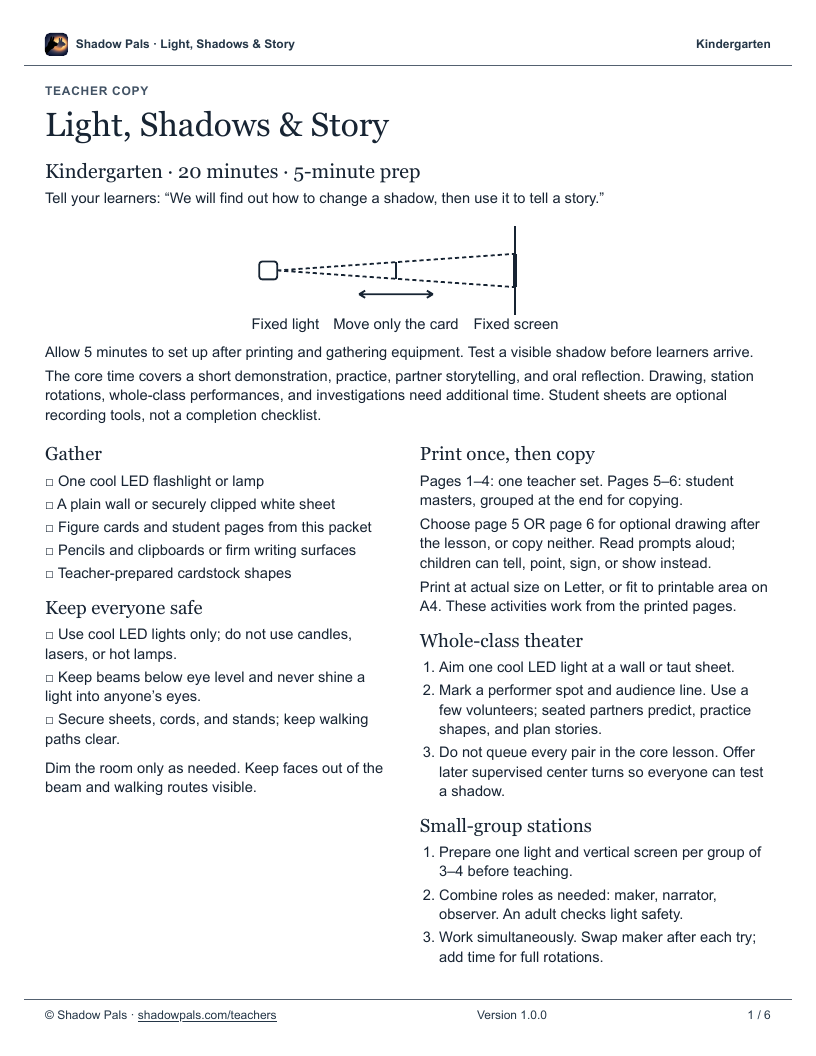
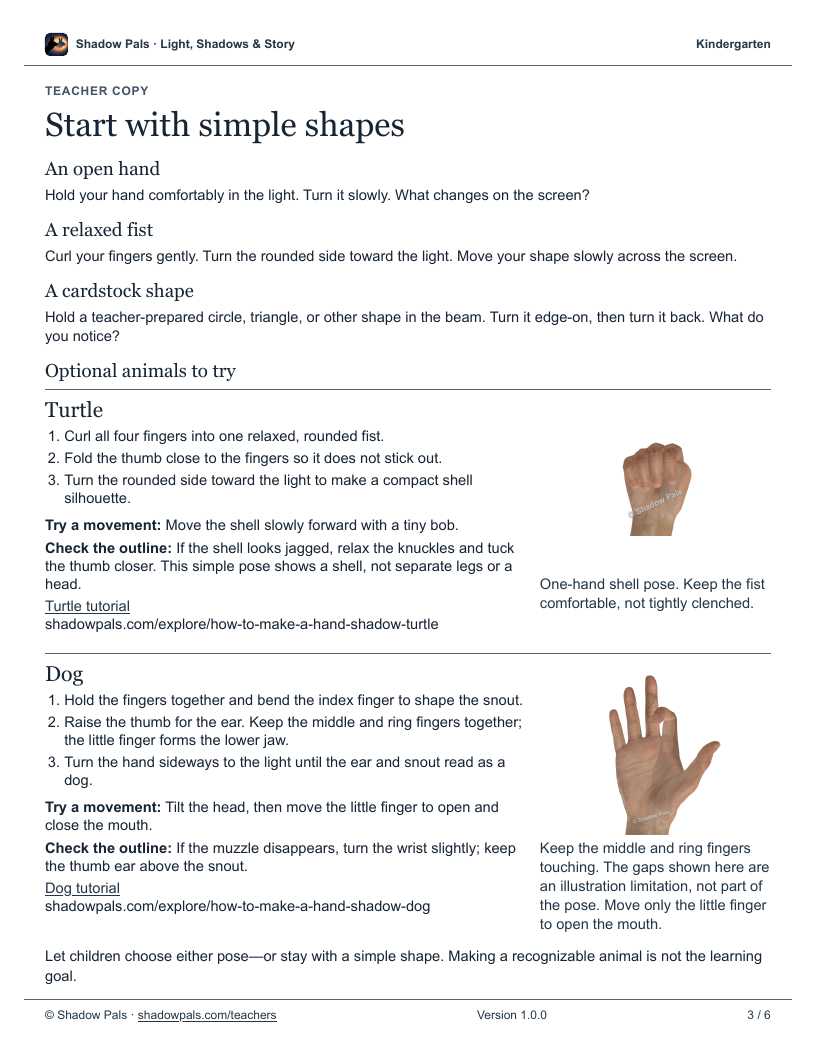
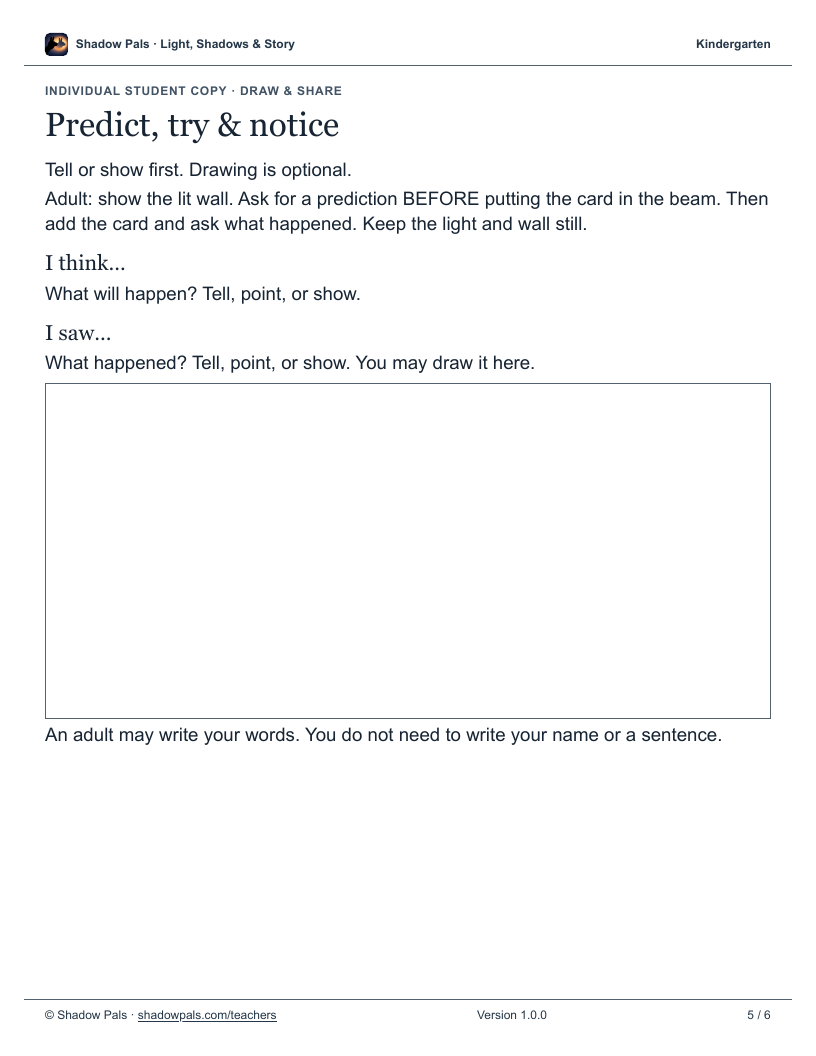
Explore simple shapes, try an optional Turtle or Dog, tell a tiny story, and share a discovery. Includes two optional drawing sheets; choose one or neither.
 Free classroom resource
Explore how shadows change, make a shape, and tell a story. Two free, low-prep lesson kits for kindergarten and grades 1–3.
Start here
20-minute lesson
Explore simple shapes, try an optional Turtle or Dog, tell a tiny story, and share a discovery. Includes two optional drawing sheets; choose one or neither.
30-minute lesson
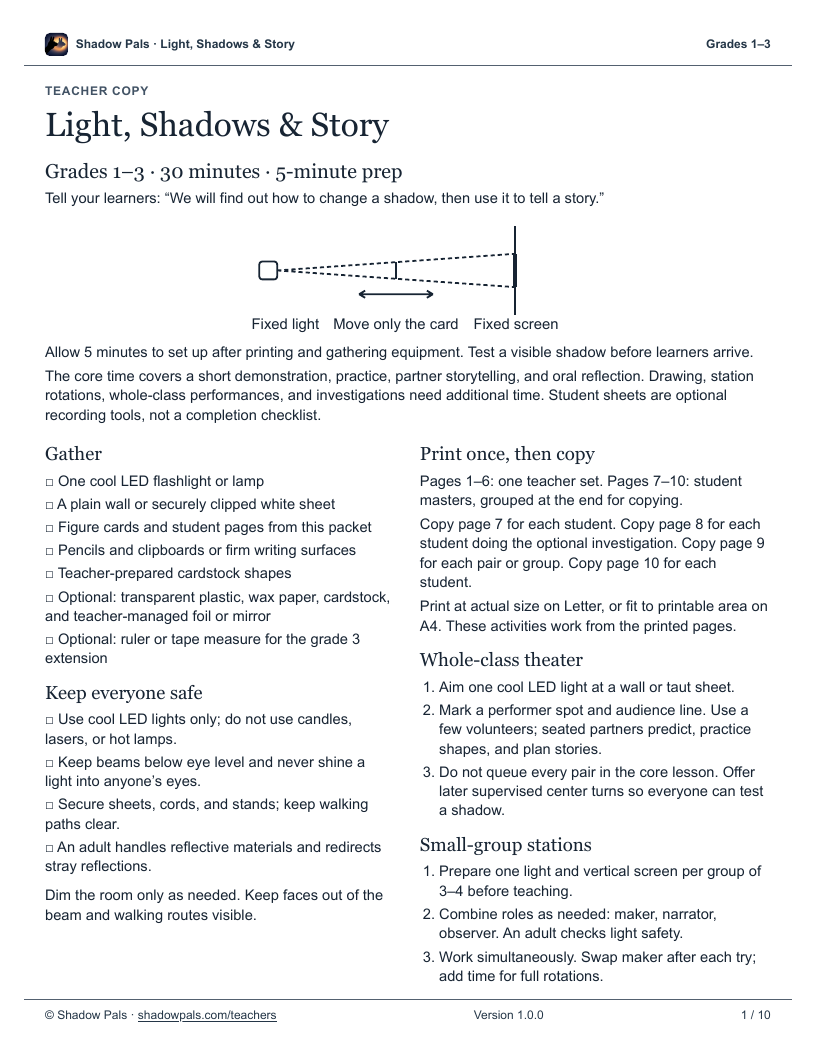
Explore a shadow change, choose from five figures or simple shapes, then tell a story. Materials and Grade 3 measurement investigations are optional follow-up sessions.
Inside the kits
Each kit has a timed plan, comfortable ways to participate, and optional recording pages grouped together for copying. Kindergarten starts with simple shapes and optional Turtle or Dog; the older kit adds three more figures and investigations.
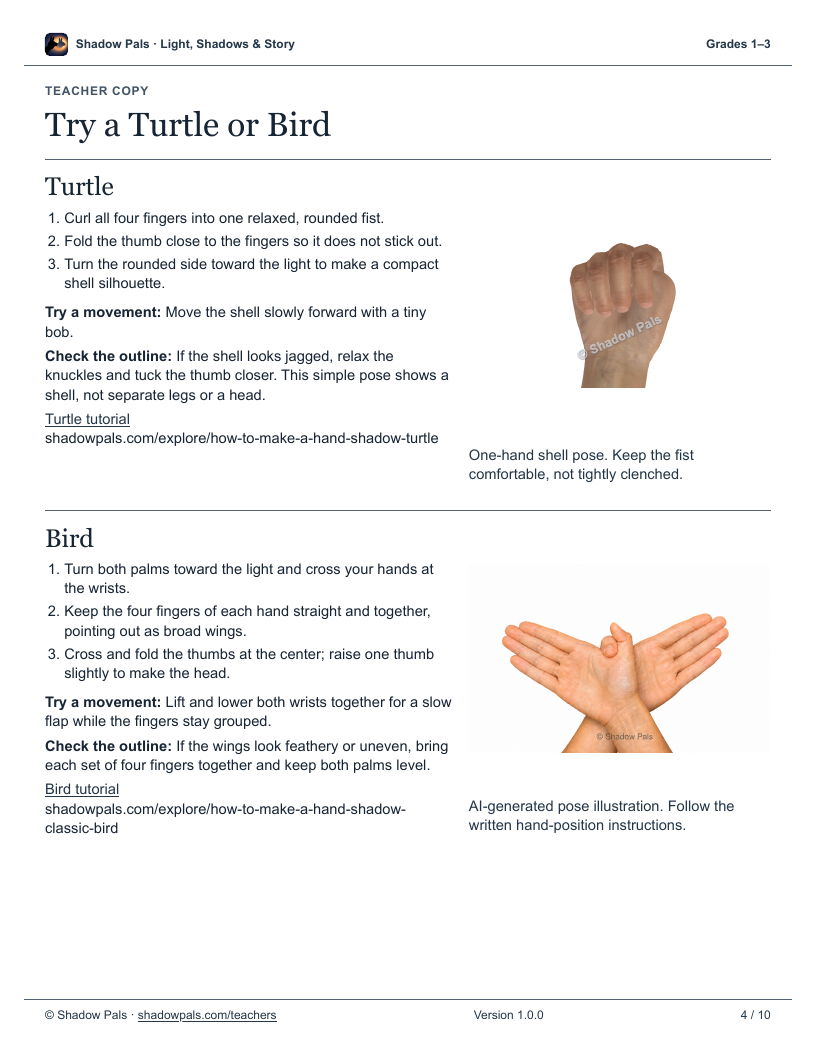
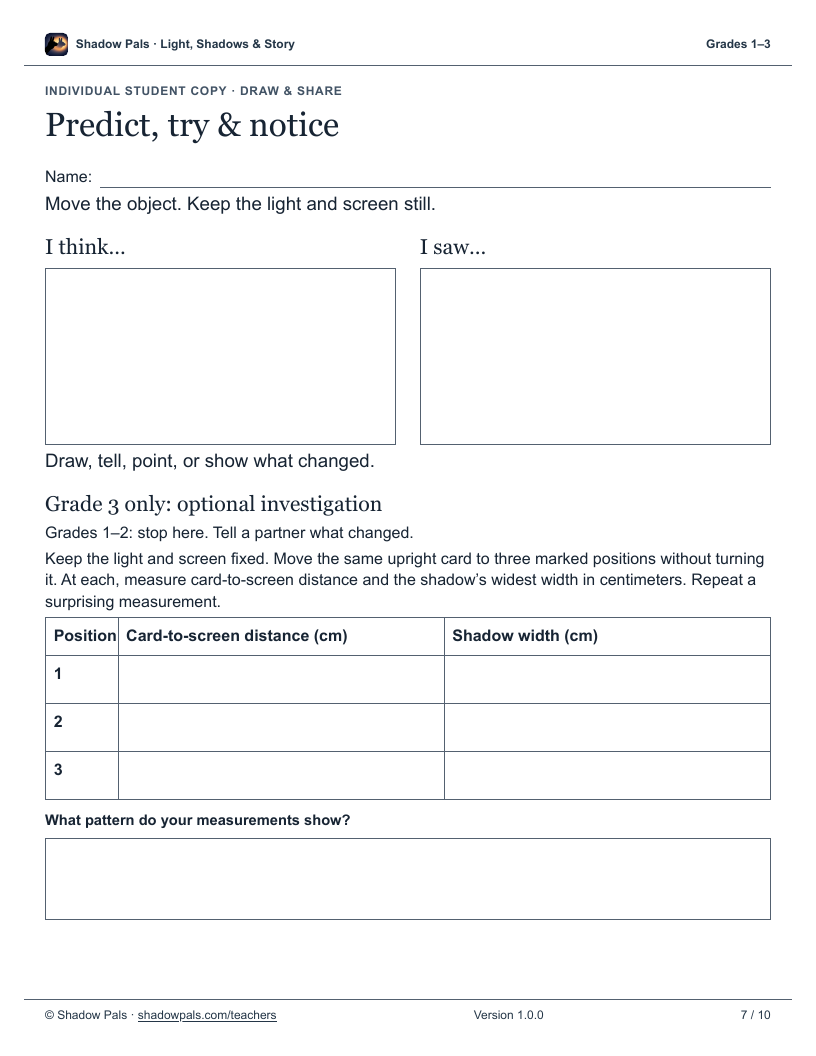
These are real pages from the downloadable kits. Open any preview to browse the complete PDF.
For a closer look at one shape, follow the one-handed cat instructions.
Flexible setup
Use one light and screen so everyone can observe the same demonstration.
Best when several safe light sources and adult sightlines are available.
Ready when you are
The semantic lesson is the primary accessible version. The PDF is made for offline classroom use.
Prepare your space, support young learners, or try the next activity with these teaching guides.
Phone flashlight, LED torch, or desk lamp? Learn how to pick the best light source for crisp shadow puppets and use it safely at home.
The secret to clean shadows is your setup. Learn the one-light rule, practical equipment choices, and positioning.
Teach a child their first shadow puppet with encouragement cues, inclusive roles, and a low-pressure practice structure.
Explore shadows with children ages 3–5 using simple hand or cardstock shapes, short playful routines, and comfortable participation choices.
Plan a short shadow puppet story with a beginning, a change, an ending, and simple roles for movement or narration.
Blurry edges, shaky shadows, hand cramps, and performance nerves. Fix common shadow puppetry problems quickly.
Educators may copy this packet for their own classes and those students’ families. Keep the credits. No resale or public rehosting. This permission does not cover third-party resources.
Read the teaching sources and standards notes