Step 1 of 6: Creating realistic animal expressions
Creating Realistic Animal Shadows
Create lifelike animal shadows by refining head shapes, limb proportions, and movement details such as breathing and gaze.
Practice Passport
When the shape feels good, mark it practiced and keep your place.
Hand Position Preview
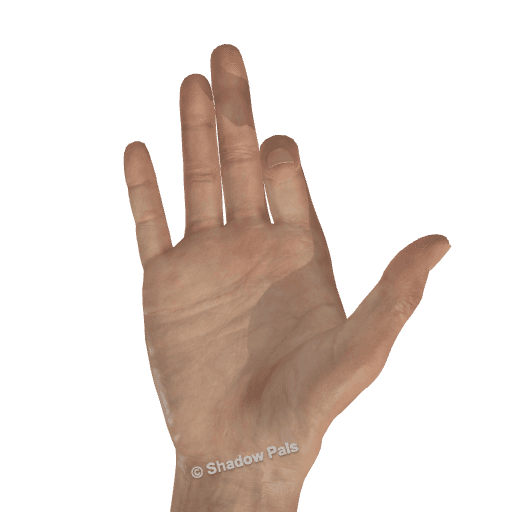
From Shape to Animal
A beginner makes a blob that is roughly dog-shaped. A skilled shadowgrapher makes a silhouette that looks like a specific dog — and the audience knows it immediately. The difference comes from attending to four details: texture, ears, posture, and movement signature.
The Four Details
1. Texture
Hold your fingers slightly uneven at the tips — not uniformly straight, not dramatically jagged. This subtle irregularity reads as fur in silhouette. For birds and eagles, fan the fingers with visible gaps between them to suggest feathers. For reptiles and crabs, keep edges sharp and angular.
2. Ears
The ear shape is often the single most recognizable feature of an animal in silhouette. Practice these:
- Pointy and upright: Cat, fox, wolf
- Long and forward: Rabbit alert
- Long and swept back: Rabbit running
- Floppy and low: Hound dog
- Wide and flat: Elephant
- Absent (just head shape): Bird, snake, fish
3. Posture
The angle of the whole figure says as much as the shape. A dog figure tilted slightly forward looks alert or stalking. The same figure tilted slightly back looks relaxed. A bird angled upward is soaring; angled slightly down is diving. You already have the tools — it is just a wrist rotation.
4. Movement Signature
Most animals read more clearly when you give them a characteristic movement. The rabbit hops (bounces up and down rhythmically). The dog wags (thumb pulses). The bird flaps (whole figure opens and closes smoothly). The wolf prowls (slow, low, horizontal movement). Learn the movement signature before you worry about the shape. A rabbit that moves like a rabbit is usually more convincing than a highly polished rabbit shape that sits completely still.
Sources & Review
Last updated: Mar 6, 2026
Verified: May 25, 2026